
Kitchen cabinets do much more than provide storage. They cover a large part of the room, influence the overall design, and affect how comfortable the kitchen feels during everyday use. The cabinet door style can make a space feel modern, traditional, warm, simple, or highly detailed.
For homeowners planning a kitchen renovation in Milwaukee, recessed panel cabinets offer a useful balance between classic and contemporary design. They provide more visual depth than a completely flat cabinet door but usually feel cleaner and lighter than heavily detailed raised-panel cabinetry.
This flexibility allows recessed cabinets to work in many different homes, from older properties with traditional architectural details to updated kitchens with quartz countertops, simple hardware, and modern appliances. However, the door style should not be selected on appearance alone. Homeowners should also consider the size of the kitchen, lighting, cabinet construction, finish, storage needs, countertops, flooring, hardware, and installation requirements before making a final decision.
What Are Recessed Panel Cabinets?
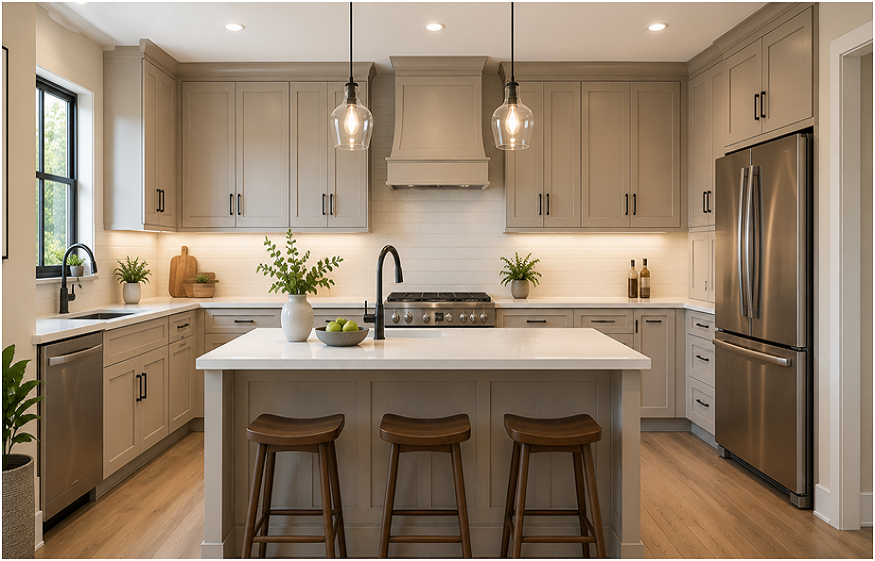
A recessed panel cabinet door has a center section that sits slightly behind the surrounding frame. The raised outer frame creates depth and definition without requiring heavy carvings or decorative details. The basic construction may sound simple, but recessed doors are available in many variations.
Some feature clean square edges and narrow frames for a more modern appearance. Others use wider rails, shaped edges, or subtle molding to create a traditional look. Homeowners exploring recessed-panel cabinet designs can therefore find options that suit different kitchen styles rather than being limited to one specific look.
Recessed panel cabinetry is also closely associated with Shaker-style doors. While many Shaker doors use a recessed center panel, not every recessed door follows the traditional Shaker profile. Differences in frame width, edge shape, and detailing can significantly change the final appearance.
Why Recessed Panels Work in Different Kitchen Styles
One reason recessed cabinet doors remain popular is their ability to work between traditional and modern design. A completely flat cabinet front can sometimes feel too minimal for an older home. On the other hand, a heavily raised or carved door may feel too formal for homeowners who want a cleaner update. Recessed doors sit comfortably between these two extremes.
They can create a traditional appearance when paired with natural wood, warm colors, detailed hardware, and stone countertops. The same basic door can feel more contemporary when finished in white, gray, navy, or green and paired with simple pulls and quartz surfaces. This makes the style especially useful in transitional kitchens, where classic and contemporary features are intentionally combined.
Consider the Character of the Home
Cabinetry should feel connected to the rest of the property rather than looking like a completely separate design. Milwaukee has a wide mix of residential architecture, including older bungalows, duplexes, historic properties, condos, suburban houses, and recently updated homes. Each setting may call for a slightly different cabinet treatment.
In a home with natural wood trim, traditional flooring, or detailed interior doors, recessed cabinetry can maintain some of that architectural character. Warm wood finishes, cream paint, bronze hardware, or brushed brass can strengthen the connection.
For a newer home or open-concept renovation, simpler recessed profiles may feel more appropriate. Narrow frames, light quartz countertops, understated hardware, and clean backsplash materials can update the kitchen without making it feel overly minimal. The goal is not to copy the existing architecture exactly. Instead, the cabinetry should feel like a natural part of the overall interior.
Read More: How Much Does a Garage Floor Coating Cost in 2026?
Match the Door Profile to the Size of the Kitchen
Cabinet door details are repeated across almost every wall of the kitchen. Because of this, a design that looks subtle on one sample door can become much more noticeable when installed throughout the room. Small kitchens often benefit from simpler recessed panel profiles.
Narrow or medium-width frames create enough depth to keep the cabinetry interesting without adding too much visual weight. Clean lines can also make a compact kitchen feel calmer and less crowded. Larger kitchens can support more detailed profiles, wider frames, decorative molding, and taller cabinetry. However, homeowners should still maintain balance.
Cabinets are only one part of the kitchen. Countertops, flooring, lighting, backsplash materials, appliances, and hardware also need visual space. Whenever possible, look at a complete cabinet display rather than judging the design from one door sample. A full run of cabinetry provides a much better sense of scale and repetition.
Choose Colors According to Light and Room Size
Cabinet color can completely change the way a recessed panel door looks. Light colors such as warm white, cream, pale gray, and light natural wood can make the profile feel softer and help the kitchen appear brighter. These finishes can be especially helpful in narrow rooms or kitchens with limited natural light. Mid-tone colors add more definition to the recessed sections. Gray, greige, muted green, and medium wood finishes can create depth without making the cabinetry feel overly dark.
Darker colors such as navy, charcoal, espresso, walnut, and deep green produce a stronger effect. The frame and recessed center become more noticeable, which can create an attractive architectural feature. However, dark cabinetry should be balanced carefully in smaller kitchens. Homeowners may choose to use a deeper color only on an island or lower cabinets while keeping the upper section lighter.
Pay Attention to Milwaukee’s Changing Light
Natural light is an important part of cabinet selection, and it does not remain consistent throughout the year. Milwaukee kitchens can receive noticeably different light during bright summer months and darker winter days. A cabinet that appears bright and neutral under showroom lights may look cooler or deeper inside the home. Room orientation also matters.
A kitchen with strong natural daylight may handle medium and dark finishes comfortably. A room with smaller windows or limited daylight may benefit from lighter cabinetry and warmer artificial lighting. Before ordering, place cabinet samples in the kitchen and observe them in the morning, afternoon, and evening.
Also compare them beside:
- Flooring
- Countertops
- Wall paint
- Backsplash samples
- Appliances
- Hardware finishes
This simple step can prevent a color that looked perfect in isolation from feeling wrong once the full kitchen comes together.
Check Cabinet Construction, Not Just the Door
A cabinet door creates the first visual impression, but the interior construction affects how the kitchen performs over time. Cabinets are opened and closed many times each day. Drawers may hold heavy cookware, while shelves support dishes, appliances, and pantry products.
When comparing quality recessed kitchen cabinets, homeowners should inspect:
- Cabinet box construction
- Drawer joints
- Shelf thickness and support
- Hinges
- Drawer slides
- Interior finish
- Door alignment
- Surface finish
- Edge consistency
Full-extension slides can make drawers easier to use because items at the back remain accessible. Soft-close hinges and drawer systems can reduce impact and create smoother daily operation. The finish should also be inspected around the recessed edges and corners. These areas can collect grease and cleaning residue if they are not maintained properly, so an even, durable coating is important.
Read More: Denver’s Most Common Roof Problems and How to Fix Them
Think About Cleaning and Maintenance
Recessed panel cabinets have more edges than flat-panel doors, so they may require slightly more attention during cleaning. Dust and cooking residue can settle along the inner frame, especially on cabinets near the range.
Fortunately, the design is still relatively simple compared with highly decorative cabinetry. Regular cleaning with a soft cloth and a cleaner suitable for the cabinet finish is usually enough for normal maintenance.
Avoid allowing grease and moisture to remain on the surface for long periods. Cabinet manufacturers may have specific cleaning recommendations, especially for painted, stained, laminate, or specialty finishes. Hardware should also be kept clean because oils from hands can build up around knobs and pulls.
Plan Storage Before Ordering Cabinets
The right door profile will not make up for an inefficient storage layout. Before the cabinets are finalized, homeowners should think carefully about where everyday items will be stored. Deep drawers can make pots and pans easier to access than low shelves. Pull-out pantry systems can bring food items forward instead of allowing them to disappear at the back of deep cabinets.
Useful storage features may include:
- Deep cookware drawers
- Spice pull-outs
- Tray dividers
- Pantry organizers
- Hidden trash and recycling units
- Roll-out shelves
- Drawer organizers
- Corner storage systems
Corner cabinets deserve particular attention because they can create large areas that are difficult to reach. Rotating shelves and pull-out mechanisms can make these spaces more practical. The best storage plan should reflect actual household habits rather than simply filling every available area with cabinets.
Coordinate the Cabinets With Countertops
Cabinet doors and countertops are two of the largest visible surfaces in the kitchen, so they should work together. Recessed panel doors can pair with both simple and highly patterned countertop materials. If the countertop has dramatic veining or strong movement, a cleaner recessed profile can provide balance. This allows the stone or quartz pattern to become the main visual feature.
A quieter countertop provides more freedom to use a stronger cabinet color, visible wood grain, or a more detailed recessed edge. The undertones should also coordinate. A cool gray cabinet may look disconnected beside a strongly warm beige surface. Likewise, a warm wood cabinet may require a countertop with cream, beige, soft white, or warm gray tones to create a natural transition. Always compare the cabinet and countertop samples side by side before placing an order.
Use Hardware to Change the Look
Hardware can significantly influence whether recessed cabinetry feels modern or traditional. Long, simple bar pulls can give the doors a more contemporary character. Matte black hardware creates strong contrast against white, cream, or light wood cabinets.
Brushed nickel and chrome provide a clean, understated appearance. Brass and bronze introduce warmth and can work beautifully with natural wood, green, cream, gray, or darker cabinet finishes. Traditional kitchens may also use knobs or cup pulls.
The size of the hardware should match the cabinet doors and drawers. Very small knobs may appear out of proportion on large drawers, while oversized handles can overwhelm narrow cabinet fronts. Homeowners should consider how the hardware feels in the hand as well as how it looks.
Coordinate Cabinetry With the Flooring
Flooring creates another large visual surface, and it can either support or compete with the cabinetry. Natural wood cabinets should not necessarily match wood flooring exactly. When both materials have nearly identical tones and grain, the kitchen may look flat.
A slight difference in color can create better definition. Painted recessed cabinets are usually easier to coordinate with wood floors because they create natural contrast. White, gray, cream, navy, and green cabinetry can all work with different wood tones depending on their undertones. Tile and luxury vinyl can also provide a neutral foundation for recessed cabinetry. Samples should again be compared in the actual room rather than selected separately.
Make Sure the Layout Supports Daily Use
Kitchen cabinetry should help people move easily between food preparation, cooking, cleaning, and storage areas.
Frequently used pots and pans should remain near the cooking zone. Dishes may be more convenient near the dishwasher, while knives, boards, and mixing bowls should be easy to access from the primary preparation area.
The layout should also account for door and drawer clearances.
Check that:
- Refrigerator doors can open fully
- The dishwasher does not block important drawers
- Cabinet doors do not collide in corners
- Island drawers have sufficient walking space
- Hardware does not interfere with nearby appliances
- Pantry doors can open comfortably
These details can have a greater effect on everyday satisfaction than decorative features.
Why Visit a Local Cabinet Shop in Milwaukee?
Choosing cabinets online can help homeowners compare styles, but seeing products in person provides a clearer understanding of door profiles, finishes, construction, and hardware quality. Milwaukee homes also vary widely in age, kitchen size, and layout, so local guidance can be useful when planning cabinetry for an existing space.
Visiting a kitchen cabinet shop in Milwaukee allows homeowners to compare cabinet samples, test drawers and hinges, and see how different colors look under real lighting. It can also provide an opportunity to discuss measurements, storage challenges, appliance clearances, and cabinet configurations that suit local homes.
For homeowners renovating an older bungalow, compact galley kitchen, condo, or larger suburban property, reviewing cabinetry in person can make it easier to select a style that fits both the room and the character of the home.
Common Mistakes to Avoid
Choosing recessed cabinetry is usually straightforward, but several common mistakes can affect the final result.
Choosing the Door Before the Layout
A cabinet style should not be finalized before storage needs, measurements, and appliance locations are understood.
Using Too Much Detail
A decorative door combined with patterned countertops, busy flooring, ornate hardware, and detailed backsplash tile can make the kitchen feel crowded.
Ignoring Undertones
White, gray, beige, and wood finishes can all have warm or cool undertones. Materials that appear neutral separately may conflict when placed together.
Selecting Dark Cabinets Without Considering Light
Dark recessed cabinetry can look beautiful, but it may make a small or poorly lit room feel enclosed.
Focusing Only on Appearance
The cabinet box, drawers, shelves, hinges, and slides are just as important as the door design.
Ordering From Rough Measurements
Small measurement errors can affect fillers, appliances, countertops, and door clearances. Final measurements should be verified before cabinets are ordered.
Final Thoughts
Recessed panel cabinets offer a useful combination of depth, simplicity, and design flexibility. They can suit traditional Milwaukee homes, transitional renovations, farmhouse-inspired spaces, and cleaner contemporary kitchens.
However, choosing the right cabinetry involves more than finding an attractive door sample. Homeowners should consider the profile, frame width, finish, lighting, room size, construction quality, storage needs, countertops, flooring, hardware, appliance clearances, and overall kitchen layout.
Seeing recessed-style kitchen cabinet options in person can also provide a more accurate understanding of their color, scale, and construction. With thoughtful planning, recessed panel cabinetry can create a kitchen that feels connected to the home, provides practical everyday storage, and maintains a balanced appearance for years to come.