

A garage floor rarely gets an easy life. It supports parked vehicles, rolling toolboxes, storage cabinets, lawn equipment, and everything else that does not have a place inside the house. Add oil drips, wet tires, dropped tools, road salt, and changing temperatures, and bare concrete can start looking worn much sooner than homeowners expect.
For homeowners in Woodland Park, NJ, seasonal rain, winter moisture, snow residue, and road salt can place even more stress on garage concrete. These local conditions make durability, surface preparation, and easy maintenance important considerations when planning a garage upgrade. That is why garage floor coatings continue to attract attention during home improvement projects. A properly selected coating can make concrete easier to maintain while giving the garage a cleaner, more finished appearance.
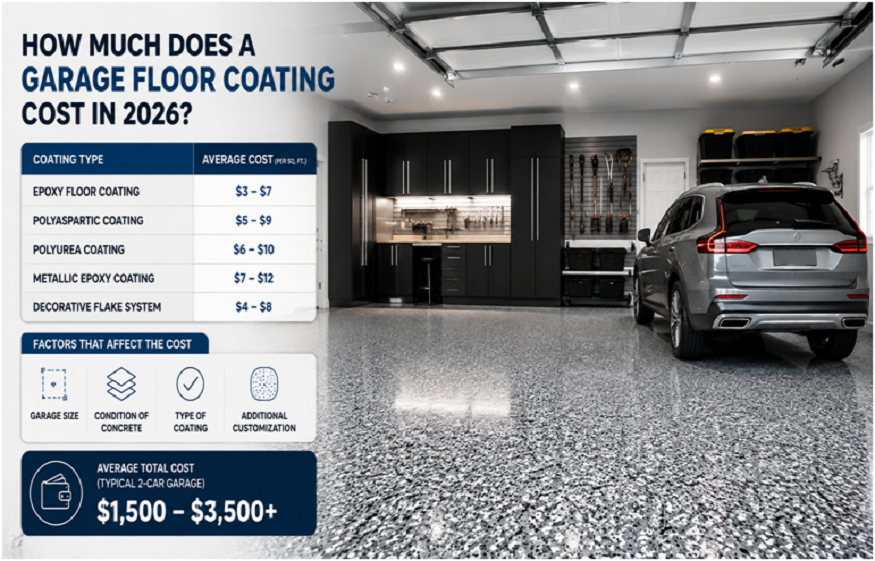
Of course, appearance is only part of the decision. For most homeowners, the first practical question is cost. In 2026, the price of a garage floor coating can vary significantly depending on the size and condition of the floor, the coating system, preparation work, decorative choices, and whether the project is handled as a DIY job or by a professional installer. Here is what homeowners should know before setting a budget.
What Does a Garage Floor Coating Actually Include?
A garage floor coating is more than a layer of ordinary paint. Professional systems are applied over prepared concrete and are designed to create a bonded surface that can better handle common garage conditions. Depending on the system, installation may include concrete grinding, crack repair, a primer or base coat, decorative material, and a protective topcoat.
Common garage flooring options include:
- Epoxy coatings
- Polyaspartic systems
- Polyurea coatings
- Decorative flake systems
- Concrete sealers
Epoxy remains a familiar option for residential garages because it can combine durability, design flexibility, and relatively straightforward maintenance.
Homeowners considering garage epoxy floor coating services should pay attention to what is included in the installation rather than comparing the coating material alone. Surface preparation, repair work, coating thickness, and the final topcoat can make a major difference in both price and performance.
What Should Homeowners Budget in 2026?
There is no single national price that applies to every garage.
As a general planning range, professionally installed epoxy systems may fall around $6 to $12 per square foot, while simpler DIY approaches can start lower. Actual quotes may move above or below those figures depending on the slab and the products being used.
For budgeting purposes, that could translate into ranges such as:
| Approximate Garage Area | General Planning Range |
| 250 sq. ft. | $750–$3,000 |
| 400 sq. ft. | $1,200–$4,800 |
| 600 sq. ft. | $1,800–$7,200 |
These figures should be treated as broad estimates, not guaranteed project prices. A garage with clean, sound concrete may stay closer to the lower end of the range. A floor with deep cracks, oil contamination, peeling paint, moisture concerns, or extensive decorative work can require considerably more labor and material. That is why square footage is only the starting point.
Why Two Garages of the Same Size Can Cost Different Amounts
Imagine two identical two-car garages. The first has relatively clean concrete with a few small cracks. The second has several layers of old paint, heavy oil stains, pitted areas, and moisture problems near the garage door. Both floors may measure 400 square feet, but they are not the same project.
The second garage requires more preparation before a coating can even be applied. More preparation means additional labor, equipment, repair materials, and project time. Several factors usually have the greatest effect on the final estimate.
Garage Size
Most flooring projects are priced partly by square footage. A larger garage requires more coating, more decorative material, and more time to prepare and finish. Steps, concrete curbs, workshop extensions, and connected storage areas can also increase the actual surface being coated. Homeowners should confirm exactly which areas are included when reviewing a quote.
Condition of the Concrete
The existing slab can have a bigger effect on price than many homeowners expect.
Common issues include:
- Hairline or wider cracks
- Pitted concrete
- Broken edges
- Oil and grease contamination
- Old paint
- Previous sealers
- Uneven sections
- Moisture-related damage
Small repairs may be straightforward. More extensive damage can require patching, grinding, filling, or other corrective work before installation continues. A new coating should not simply hide serious concrete problems.
Surface Preparation
Preparation is one area where low-cost estimates and more complete installations may differ substantially. Professional installers often mechanically grind concrete to remove weak surface material and create a profile that helps the coating bond properly. Grinding can also help remove old coatings and certain contaminants.
This stage requires equipment, labor, and dust control, so it adds to project cost. However, cutting preparation short to save money may create a much more expensive problem later if the coating begins peeling or separating. For homeowners comparing quotes, one of the most useful questions is simple:
How will the concrete be prepared?
The answer says a lot about what the estimate actually includes.
Moisture Conditions
Concrete can appear dry while still allowing moisture vapor to move through the slab. That matters because excessive moisture can interfere with coating adhesion. Warning signs can include white mineral deposits, dark patches, bubbling in an old coating, or recurring damp areas.
Some floors may require moisture testing or an additional moisture-control product before the main coating system is installed. That adds cost, but ignoring an existing moisture problem is rarely a sensible way to reduce a project budget.
The Type of Coating Makes a Difference
Not every garage floor system is priced the same way.
Epoxy
Epoxy is widely used for residential garages and can be installed in solid colors or combined with decorative flakes and other finishes. The final price depends on the quality and type of epoxy, the number of layers, and the protective system used over it.
Polyaspartic
Polyaspartic coatings are often chosen for faster curing and stronger UV stability than some traditional epoxy systems. They may cost more, but reduced downtime can be useful for homeowners who cannot keep the garage empty for an extended period.
Polyurea
Polyurea systems are valued for flexibility and fast curing characteristics. Product formulation and installation requirements can place them at a higher price point than basic coating systems. The better choice is not automatically the most expensive one. It is the one that fits how the garage will actually be used.
Decorative Finishes Can Change the Budget
A plain solid-color floor is usually simpler than a highly customized decorative system.
Additional design choices may include:
- Full decorative flake broadcasts
- Custom flake blends
- Metallic effects
- Multiple colors
- Decorative borders
- High-gloss finishes
- Added traction
- Specialty topcoats
These upgrades can make the garage feel more like a finished part of the home, but they also involve additional materials and installation steps. Homeowners working within a fixed budget may get better value by prioritizing good preparation and a suitable protective system before spending heavily on visual customization.
DIY vs. Professional Installation
The lower starting price of DIY epoxy kits makes them tempting.
A basic kit may appear inexpensive compared with a professional estimate, but the coating itself is not the only expense.
A DIY project may also require:
- Concrete cleaner
- Crack-repair material
- Degreaser
- Grinder rental
- Dust-control equipment
- Mixing tools
- Rollers and application tools
- Protective equipment
There is also the question of experience. Mixing ratios, working times, surface preparation, moisture conditions, and application thickness all affect the final result. A coating applied over poorly prepared concrete may look good initially and still begin failing later.
Professional installation costs more upfront because the price generally includes labor, preparation equipment, repair work, materials, and application experience.
For an uncomplicated slab, DIY may still be reasonable for an experienced homeowner. For floors with damage, old coatings, heavy contamination, or moisture concerns, professional preparation often becomes much more important.
Look Beyond the Headline Price
A garage-floor estimate should explain more than the total number at the bottom of the page.
Homeowners should ask whether the quote includes:
- Mechanical surface preparation
- Crack repair
- Removal of old coatings
- Moisture testing
- Primer
- Base coat
- Decorative flakes or other finishes
- Protective topcoat
- Slip-resistant additive
- Cleanup
- Curing instructions
- Warranty coverage
This is also why researching the cost of an epoxy garage floor is more useful when homeowners look at the entire installation process rather than one per-square-foot figure. A $2,000 quote and a $3,000 quote are not truly comparable if one includes extensive preparation and several coating layers while the other does not.
What About Woodland Park and North Jersey Pricing?
Location can influence labor rates, material costs, concrete conditions, and even the type of preparation a garage requires. In Woodland Park, NJ, winter conditions are worth considering. Vehicles can carry snow, moisture, abrasive grit, and road salt into the garage. That repeated exposure is different from what a garage floor experiences in a warm, dry climate.
For local homeowners, it makes sense to ask how a proposed system handles winter residue, wet tires, cleaning, and seasonal temperature changes. Epoxy Shine, based in Woodland Park, is one local example of a contractor offering garage epoxy systems in New Jersey. Homeowners should still compare project scopes, preparation methods, materials, warranties, and written estimates before making a decision.
How Long Will a Coated Garage Floor Last?
There is no useful one-size-fits-all lifespan. A professionally prepared and installed floor can provide many years of service, but longevity depends on several variables:
- Concrete condition
- Quality of preparation
- Coating system
- Number of layers
- Vehicle traffic
- Chemical exposure
- Impact from tools and equipment
- Moisture conditions
- Cleaning habits
A lightly used residential garage may age differently from a working garage where vehicles are repaired, heavy equipment is moved, and chemicals are regularly used. Instead of focusing only on a promised number of years, homeowners should ask how the coating is designed for their specific use and what maintenance will be required.
Read More: Kitchen Island Countertops: Design Ideas That Make the Space Stand Out
Does an Epoxy Floor Require Much Maintenance?
Compared with unfinished concrete, routine care is relatively simple. Loose dirt, grit, and road residue should be swept or vacuumed regularly. Occasional mopping can remove finer dirt and winter salt. Oil and automotive-fluid spills should still be cleaned promptly. Even when a coating has good chemical resistance, there is little benefit in allowing harsh substances to remain on the floor longer than necessary. Heavy tools, jacks, or storage cabinets should also be moved carefully rather than dragged across the surface. Good maintenance does not need to be complicated. The goal is simply to prevent avoidable abrasion, staining, and impact damage.
Can You Reduce the Cost Without Cutting the Wrong Corners?
Yes, but the savings should come from the right places.
Keep the Design Simple
A standard color or flake blend can provide a finished appearance without the additional labor associated with highly customized designs.
Compare Detailed Quotes
Do not compare totals alone. Compare preparation, materials, layers, and warranty terms.
Deal With Problems Early
Small cracks and minor concrete damage are usually easier to address before they become larger repairs.
Ask What Your Garage Actually Needs
Not every residential garage needs the most advanced coating available. A knowledgeable installer should be able to explain which features are useful and which are unnecessary. What homeowners should generally avoid is reducing the preparation quality simply to lower the initial bill. The coating can only perform as well as the surface it is bonded to.
So, Is a Garage Floor Coating Worth It?
That depends on what the homeowner wants from the garage. If the space is rarely used and appearance is not a concern, leaving the concrete unfinished may be perfectly acceptable. On the other hand, a household that parks vehicles daily, uses the garage as a workshop, or wants a cleaner finished space may see practical value in a professional coating. The benefits are less about creating a shiny floor and more about making the space easier to maintain while protecting the concrete from routine garage conditions. That distinction matters. A floor should be selected because it fits the way the home is used, not simply because it looks impressive in photographs.
Final Thoughts
The cost of a garage floor coating in 2026 depends on much more than garage size.
Concrete condition, surface preparation, moisture, coating type, decorative choices, local labor, and the number of layers can all move the final estimate up or down. Professional epoxy installations may commonly be budgeted by square footage, but homeowners should treat broad ranges as starting points rather than guaranteed prices.
For homeowners in Woodland Park, NJ, winter moisture and road salt add another practical consideration when selecting a system.
The best way to compare garage-floor projects is to look beyond the headline price. Ask what preparation is included, which products will be applied, how the floor will be protected, and what maintenance is expected afterward.
A well-planned project is not necessarily the cheapest or the most expensive. It is the one where the price, preparation, materials, and intended use of the garage make sense together.
Read More: Denver’s Most Common Roof Problems and How to Fix Them
Frequently Asked Questions
How much does professional garage epoxy flooring cost per square foot?
Professional epoxy installations may commonly fall around $6 to $12 per square foot, although concrete repairs, decorative finishes, moisture treatment, and local labor can change the final price.
Does a damaged garage floor cost more to coat?
Usually, yes. Cracks, pitting, oil contamination, old paint, and weak concrete may require additional preparation and repair before the coating is applied.
Is DIY epoxy cheaper than professional installation?
DIY has a lower initial material cost, but homeowners should also account for preparation equipment, repair supplies, application tools, and the risk of having to redo a failed coating.
Do decorative flakes increase the price?
They can. The final cost depends on the type of flakes, coverage level, coating system, and protective topcoat.
Should I choose a contractor based on the lowest quote?
Not necessarily. Compare surface preparation, repairs, coating materials, number of layers, curing instructions, and warranty coverage before deciding which proposal offers better overall value.